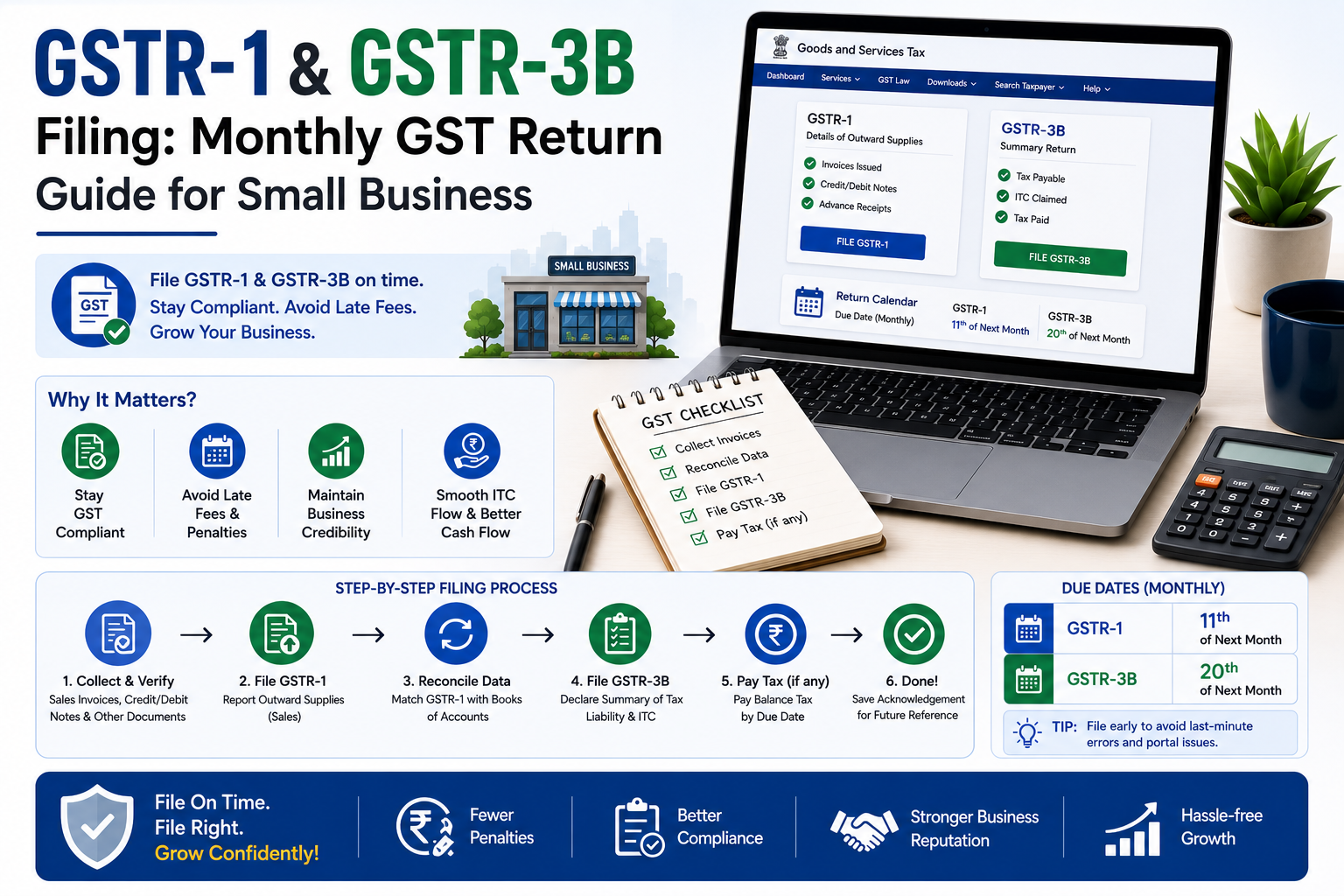
Two returns, two purposes
Registered GST taxpayers must typically file two monthly returns (unless on QRMP scheme):
- GSTR-1 — Outward supplies: sales invoices you issued to customers
- GSTR-3B — Summary return: tax liability, Input Tax Credit (ITC) claimed, and payment
Think of GSTR-1 as what you sold and GSTR-3B as what you owe after adjusting purchases.
Due dates (regular taxpayers)
- GSTR-1: 11th of the following month (turnover above ₹5 crore — monthly; others may file quarterly under QRMP)
- GSTR-3B: 20th of the following month (22nd/24th for certain states under QRMP)
Late filing attracts ₹50 per day per return (₹20 for nil returns) plus interest on outstanding tax.
Before you file: reconcile your books
- Match sales register with GSTR-1 entries — every B2B invoice must carry correct GSTIN
- Download GSTR-2B — auto-drafted ITC statement from suppliers' filings
- Claim ITC only for invoices appearing in GSTR-2B and paid within 180 days
- Reverse ITC on blocked items (motor vehicles for personal use, food, club memberships, etc.)
GSTR-1 essentials
- B2B invoices (to registered dealers) in Table 4
- B2C large invoices (inter-state above ₹2.5 lakh) in Table 5
- B2C others and nil-rated/exempt supplies in respective tables
- Amendments via GSTR-1 tables 9–11 if you missed earlier periods
GSTR-3B essentials
- Report outward taxable, zero-rated, and exempt supplies
- Claim eligible ITC from GSTR-2B (do not over-claim — triggers notices)
- Pay tax via challan before or at filing; use cash ledger + ITC ledger
- File even if nil turnover to avoid late fee accumulation
Red flags that cause GST notices
- ITC claimed higher than GSTR-2B without valid reason
- Mismatch between GSTR-1 and GSTR-3B taxable values
- Continuous nil returns while bank credits show business activity
- Wrong HSN/SAC codes or incorrect tax rates on invoices
AONETAX offers monthly GST return filing, GSTR-2B reconciliation, and annual GSTR-9 support for traders, retailers, and service providers. One fixed fee, expert review before every submission.